About us
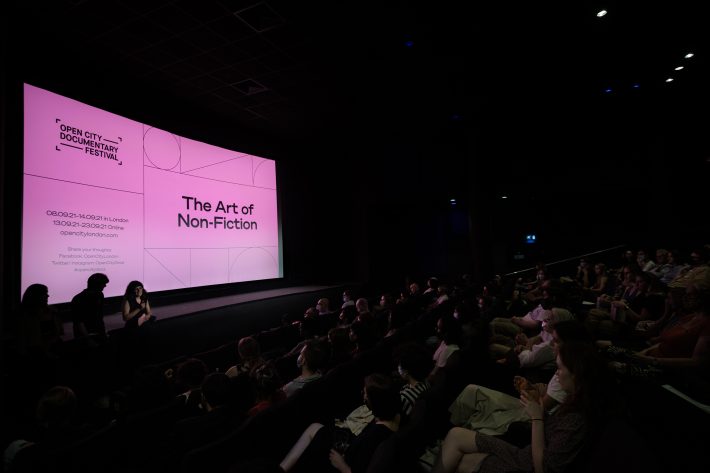
Open City Documentary Festival is one of the UK’s leading festivals for non-fiction cinema. Based in the Anthropology department at University College London, Open City proposes a bridge between academia and the independent film community in London. Open City Documentary Festival seeks to nurture experimentation within the expanded field of non-fiction cinema, from artists’ moving image to documentary, the essay film, audio and cross-media works. In conceiving the festival as a discursive space, we intend to provoke dialogue, creation and research through the collective participation in screenings and events. Some of the artists and filmmakers screened at the festival in recent years include Pablo Alvárez Mesa, Ute Aurand, Robert Beavers, Betzy Bromberg, Mary Helena Clark, Alexandra Cuesta, Luke Fowler, Haneda Sumiko, Kazuo Hara, Laura Huertas Millán, Onyeka Igwe, Naomi Kawase, Zhao Liang, Simon Liu, Rosine Mbakam, Morgan Quaintance, Miko Revereza, Ben Rivers, Jessica Sarah Rinland, Riar Rizaldi, Renate Sami, Tsuchimoto Noriaki, Alia Syed, Maryam Tafakory and Ana Vaz.
In addition to an annual film festival, we deliver training programmes, the bi-annual publication Non-Fiction and screening projects throughout the year that aim to challenge and expand the idea of documentary in all its forms. The 16th edition of the festival will take place in London in April 2026 in venues across London including the Institute of Contemporary Arts, the Barbican, Tate Modern, Bertha DocHouse, Close-Up Cinema and the Rich Mix.
We are based in the Public Anthropology section, home to the MA in Ethnographic and Documentary Film Practice, MFA in Creative Documentary, MA in Immersive Factual Storytelling, MA in Audio Storytelling for Radio and Podcast and MA in Designing Audio Experiences.
As part of London’s Global University, we know diversity fosters creativity and innovation. We are committed to equality of opportunity, to being fair and inclusive, and to being a place where we all belong. The value we place on equality, diversity and inclusion underpins and informs all aspects of our work.
Our Faculty’s Ten Year Vision and Strategy sets out that by 2029 we will have a significantly more diverse and equal workforce at all levels and in all roles, across all departments. We will strive to transform structural inequalities and resist systemic bias within the Faculty, ensuring that staff from different backgrounds and with differing identities feel included and accepted as individuals and are able to thrive at work as fully equal members of the Faculty. To help deliver on these promises, a new Faculty Equality Diversity and Inclusion (EDI) Strategic Board was set up.