Alexander Horwath on Henry Fonda for President

By Emily Lewis
Alexander Horwath has worked for over four decades as a film historian, curator, and writer. In addition to curating the film programme for Documenta 12 in 2007, he was director of the Viennale between 1992 and 1997, then of the Austrian Film Museum between 2002 and 2017 – taking over, in that last role, from the museum’s co-founders Peter Kubelka and Peter Konlechner. Not your typical moving image artist, Horwath was in attendance at Open City this year with two screenings: the first, his debut feature, a three-hour essay film called Henry Fonda for President. The same day, Horwath presented The Clock: or 89 Minutes of Free Time, previously shown at other festivals and venues. The programme is an assemblage of amateur and artists’ films, animation and documentary and a four-minute fragment from an otherwise lost Josef von Sternberg silent film.
The length of a feature film – that familiar unit of 20th century leisure time – gives The Clock its form. Additionally, it is a nod to Christian Marclay’s 2011 work of the same name. Leisure is the loose theme of the twelve short films that make up the programme: a playful, selective history of the last century, shy of the sticky temptations of nostalgia. Duration varies from film to film, with the longest coming in at 24 minutes and the shortest comprising a blink-and-you-miss it single frame. The tempo is in a state of arrhythmia. Formats vary, which means that the projectionists must switch between projectors. Within those 89 minutes, then, is blank time. The swift resizing of screen dimensions, done twelve times over, becomes its own performance.
It’s like watching an unwieldy mass pushed through a tiny hole. That unwieldy mass is the twentieth century and the tiny hole is, of course, 89 minutes, no more, no less. One of the most striking works in the programme is an untitled amateur film from March 1938, filmed on the day of the Anschluss, when the Nazis occupied Austria. Two women (possibly a lesbian couple) make house and smoke cigarettes while tanks roll past the window. It was the same ‘moment that turned 17-year-old Amos Vogelbaum into an exile,’ Horwath’s programme notes state. Any tension here is left perfectly, dangerously ambiguous. In the Austrian Film Museum’s mission statement, a quotation from Amos Vogel proposes that ‘seeing films is a way of thinking’. It’s a statement relevant to Horwath’s own style of film curation: an intuitive way of looking at cinema that allows for thought to emerge from the films themselves.
Horwath’s other story of the twentieth century is Henry Fonda for President. His first feature film uses the actor as an axis upon which American history spins. The use of a 12-hour interview tape conducted by Lawrence Grobel is the frame upon which Fonda’s short, self-deprecating responses hang. ‘I don’t like myself,’ he says frankly, ‘but I’ve been able to pretend. For somebody who doesn’t like himself, that’s great therapy’. Such healthy negation, the film suggests, primed Fonda to stand for the universal American citizen. All the hopes and fears of a nation could be projected onto him. He could be as much a president (in Young Mr. Lincoln [John Ford, 1939]) as a poverty-stricken farm hand (in Grapes of Wrath [John Ford, 1940]). Fonda was an open plain upon which a stars-and-stripes flag could be planted.
American critic Manny Farber described the ‘constricted, inside-throat articulation’ and ‘robot movement’ of Fonda in the Cold War movie Fail Safe (1964) that is ‘so precise and dignified it is like watching a seventeen-foot pole vaulter get over the bar without wasting a motion or even using a pole’. In an anecdote that opens the film, Horwath coincidentally reflects on the high jumper Gerd Wessig – the man who, competing for East Germany at the 1980 Moscow Games, became the only male high jumper to set a world record at the Olympics. It’s the summer holidays and, after watching the televised games in the day, Horwath seeks out the cinema at night. It’s here that he encounters Fonda’s films for the first time. Just as Wessig in the Olympics becomes a representative of his nation, Fonda approaches the end of a long career acting as such a representative, too.
I sat down with Horwath during the Festival to talk about Henry Fonda for President, the shifting responsibilities of the film curator and the 21st century’s turbulent relationship to film preservation.
Emily Lewis: Why did you make Henry Fonda for President at this point in your career? Can you speak about the conditions in which this film was made?
Alexander Horwath: People believe I stopped my work at the Film Museum in order to make films, which is not the case at all. I just thought 16 years at the Museum was long enough. And I’ve always waited for things to come along in my life, more or less… A few months after I ended my work at the Film Museum, an acquaintance wanted to meet me at the Berlinale [to talk about making a film]. I thought, why me? I’ve never made anything. I was hesitant.
I had ended my term at the Museum with several shows – one of which was dedicated to Fonda. In my research for that, I realised that, if you look at him not just factually or biographically, but as a composite of the actual man and the screen lives he’s inhabited, he crosses over with many important issues and questions of American democracy and American history.
First the producer tried to set it up as a TV thing – which, to my delight, didn’t work. Then we set it up as a film. We contacted Lawrence Grobel to find out whether his interview with Fonda – those 12 hours of tapes – still existed. It took two or three months just to transcribe those 12 hours.
EL: The Lawrence Grobel interview with Fonda is a guiding current in the film. Did listening to the tapes change your original script?
AH: In many details – yes. But the general arc of what I wanted to communicate about the United States and about him didn’t change much, because I was already deeply immersed in the specifics of his personality. I knew I wanted this to begin in 1651 with the arrival of the first Fondas on American soil and to end with Fonda’s death and the beginning of the Reagan presidency. And I wanted to visit and film specific places in the U.S., all related to Fonda and his screen characters, to lend a present-day reality and background to the film – without explicitly mentioning Trump, Obama, or any other contemporary political details.
For instance, I wanted to know if it was possible to go to Offutt Air Force Base because I knew Fonda’s Cold War movie, Fail Safe [which partly takes place at Offutt], would be an essential film for the project. Also, the base is located close to Omaha where Fonda grew up.
Most of that location research, finding ways to film in these places, and establishing relations with local partners was Regina [Schlagnitweit]’s work. It’s not too easy to access the US Air Force. Their movie liaison in California told us, ‘Well, we usually work with Tom Cruise on things like Top Gun: Maverick.’ But this lovely guy at the Offutt Air Force Base, the press & PR officer, said, ‘Okay, you’re such a small team, you can just come with me.’ And he walked us deep down to the former, now abandoned command centre – on camera. He became our visual anchor for that six-minute trip to the ghosts of the Cold War.
EL: The film opens with a biographical detail: you first encountered Fonda as a young man visiting the cinema in 1980. Why didn’t you continue in that biographical vein?
AH: Why can’t I find the English word for Urszene…? It’s a primal scene. It’s a primal scene as far as Henry Fonda is concerned – and the rest is the result of my 40 years of thinking about cinema.
Someone suggested that there should be much more ‘I’ in the text. And I thought about it and I wondered if it was really necessary. That ‘I’ does reappear once at the very end. It’s not something I set out to do. Now I realise it’s maybe a way of introducing a certain form of associative progression through the material.
But I am also aware that, in the last decade, the essayistic form has become such a fallback or go-to option for young filmmakers. Regina was on a jury at sixpackfilm and she said two-thirds of everything that’s submitted now is from art students doing these ‘I’-oriented films. They deal with interesting subjects – but the way they deal with it makes you feel that their being personally touched by something is more important than the nuts and bolts and tacks of the matter they’re dealing with. So maybe I’ve made a 1980s- or 1990s-style essay film, which can separate itself from these more trendy types.
EL: There are also playful elements to your film.
AH: We didn’t want to be too pure. I mean, we had rules. We chose not to include interviews. There was a certain strictness in how I wanted places to be filmed, but, at the same time, I wanted to protect myself from a formalist approach that was too cold and too rigid.
To give you an example: if I had found James Baldwin reading his text about Fonda as an audio source, I probably would have used that audio. But since, as far as I can tell, it doesn’t exist, I chose to be playful and pay tribute to James Benning’s great film American Dreams: Lost and Found [1984]. Like Arthur Bremer’s diary in that film, the Baldwin text now comes in from the right of the frame, across the screen.
EL: How do workers enter the film? What’s their relationship to Fonda?
AH: That relationship climaxes with The Grapes of Wrath, of course. But as much as I love it, the film doesn’t show the actual grape picking. It’s a missing scene.
It’s so long ago that I read psychoanalytic film theory, but it’s strange that the film, which has such a social conscience, never shows the Joad family or anyone else doing any fruitpicking. So for me it was important to… I mean it would be silly to say ‘fill that blank space’ – I cannot fill any blank space that John Ford left blank – but I wanted at least to hint at the actual work. It all circles around the private camps and the horrible conditions that they experienced, and the Roosevelt New Deal which offered more humane camps, run by the government. But even to this day, there are certain rights that other unions have that the United Farm Workers of America do not yet have.
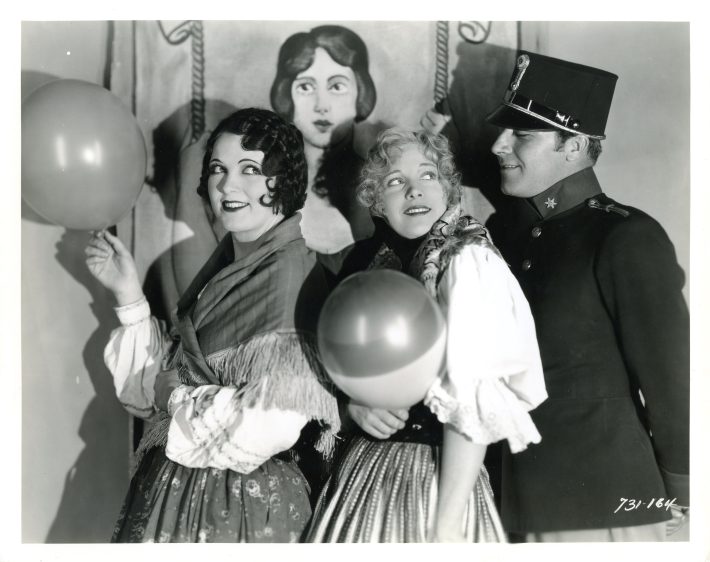
The Case of Lena Smith (Josef von Sternberg, 1929)
EL: How have you seen the role of film programmer, or film curator, change in your lifetime
AH: The changes are probably more a question of where in the ‘food chain’ your work is situated. I was very lucky in being able to play the role of festival/archive director-and-chief-curator for large parts of my working life. That special combination seems to have become even rarer than it was 30 or 15 years ago.
One of the obligations of someone who runs a cinematheque or film archive is not only to collect and show, but to preserve film in its historical material forms and also share it with audiences that way.
Every year, the International Federation of Film Archives meets to talk about the philosophical and economic issues that film archives face. I felt a certain lack of intellectual energy behind these meetings, which were mostly a chance for organisations’ directors and staff members to make a trip: one year in Hanoi, the next year in Buenos Aires, the next year in Los Angeles, and so on. I thought the discipline needed more self-reflection – which is why we [Paolo Cherchi Usai, David Francis, Michael Loebenstein, and Horwath] wrote the Film Curatorship book. My view of the discipline – in its institutional forms – was very critical and still is.
It’s another thing to view curating more narrowly – as programming. That role can feel less ‘institutional’ and more ‘creative’, but it is even more dependent on the systems and ideologies that are in place. Are you a programmer in an institution? Do you work within a certain system? Are you a freelancer who thinks of things, and not only has to find the works you want to show, but also has to find an institution like a festival or cinematheque who wants to show the programme?
What has definitely changed is that streaming is now the primary tool – and pool – of most younger curators and programmers. I tend to be a bit sceptical about this, even though I use this tool and pool just like any other person in the field. My scepticism refers to the fact that my own experience, generationally, comes from a different background. My memories of films come with the intense feelings of experiencing them on the big screen. And that big screen is still the place where a film programmer’s work mostly ends up. So I feel lucky that I had the chance to learn how films ‘speak’, and speak to each other, in the context of theatrical projections. I just think that the internet, with its own logic of distraction, breathlessness and overabundance, may not be the best place to learn and practice this craft – if your aim is to share your programs with audiences that come together for a physical séance.
That said, I do cherish the fact that entering the realm of film history has become much easier now with streaming, at least potentially. I would never discount such newer pathways, because in the 1980s I also had TV and home video as my additional sources of film historical knowledge. And now, having made a film with digital means, a film that also includes some ‘curatorial’ arguments via archival excerpts, I have found that the digital workbench can be as good a teacher as any if you try and understand the way films communicate with each other.
EL: How do you feel about preservation?
AH: Paintings can be reproduced in books, and wonderfully. People can take those books home and look at reproductions of Turner paintings there. But nobody would say we don’t need the actual Turner paintings anymore. Forms of dissemination have always changed. But artworks as they were made were kept alive, so you can still see them. Why shouldn’t that be the case with cinema?
The supporters for this kind of thinking were relatively limited, I found, even in film archival circles. I was invited to sit on a panel with Tacita Dean and Christopher Nolan 10 or 12 years ago at the BFI Southbank – and the three of us were in agreement. But the BFI at that time had begun to show almost everything on digital; I assume heritage institutions around 2010, 2012 did not feel strong enough [to resist digitisation]. Now, film cultural venues appear to be going the other way sometimes. They promote the ‘analogue experience’ as a special treat for audiences, just as they did with their ‘brand-new 4K restoration’ PR ten or fifteen years ago. My main argument at the time was that we need Kodak to continue producing film stock. We need printing machinery and labs. We also need the public funds to keep that system alive. But I fear the moment has passed when that could have been achieved on a larger scale.
EL: One last question on the Austrian Film Museum and Peter Kubelka’s Was ist Film [a cycle of 63 programs that has been running since 1996]. Why does a controversial work like Stan Brakhage’s Lovemaking [1968], which is included in the cycle, deserve to be preserved and shown?
AH: First of all, preserving and showing are two different things. Leni Riefenstahl’s films also need to be preserved, as much as I hate her and them. And, by the way, her Triumph of the Will [1935] is also part of Kubelka’s cycle.
I’m not even sure I’ve ever seen [Brakhage’s Lovemaking films]. Maybe I saw them when I was a student, during one of Kubelka’s lectures. But I deeply believe that the question of preserving artefacts should never be dependent on what a certain era or social group thinks or thought – or will think – of them. The multitude of ‘rediscoveries’ and ‘de-canonizations’ in our own time, as well as in the past, proves that point succinctly: if those works hadn’t been preserved and passed on by earlier generations, we wouldn’t be able to develop our own stance towards them. The fact that they are or were controversial at a given moment is actually the best argument of all for preserving them.
If or why or when all these artefacts should be shown is another matter. That’s the terrain where each era, social group, art institution or individual curator unavoidably expresses their priorities and interests. By looking at what was shown and not shown these interests can then be evaluated. And usually, the surrounding discourse, the arguments that were proposed for or against showing something, make the evaluation easier.
In the case of Was ist Film, two things were and are special. I thought long and hard about them in 2001 and 2002 when I began to work at the Film Museum. Kubelka has famously avoided the written word in explaining his choices, for him the films themselves supply the argument. So there wouldn’t be film notes accompanying these programs in the Film Museum’s monthly brochures. And secondly, it was obvious – and understandable – that he’d want his selection of films to remain unchanged if we were to continue showing the cycle.
I must admit that I didn’t ponder the Brakhage issue specifically, even though I do remember someone recently mentioning it as problematic. What I had to decide in 2001 and 2002 was the more general question if and how the cycle would be re-implemented once all the necessary physical and programmatic renovations at the Film Museum had been achieved. We re-started Was ist Film in 2005, since Kubelka had accepted that we would commission separate texts on each program in the cycle, later to be collected in a book. He also agreed to a long conversation which introduces the book, where he speaks about his choices and his general reasoning. In addition, we developed a second series called The Utopia of Film [from which The Clock was born]. Like Kubelka’s cycle, it was shown on Tuesdays. The first screening each Tuesday was always Was ist Film: a rather essentialist search for what the medium entails. A high-modernist approach. And the second screening was part of the Utopia series, which looked outward, asking how films relate to actual people’s experience and to historical experience. I didn’t exactly want to ‘counter’ Was ist Film, but I wanted to offer another way of looking at film history.
We’ve arrived at a stage where film curatorship is being recognised as a historical practice. The ways in which films were and are shown, their constellations or omissions in certain curatorial efforts, the cultural politics and social movements to which such efforts contribute – all that is now viewed as a relevant part of film history. So it makes sense, in the museum context at least, to re-present not only the films, but also specific curatorial practices. Was ist Film can serve as a great example. As Peter Kubelka might even agree, it sheds light not only on the films he included, but also on the film/art discourses of a time and place that gave him and his generation of filmmakers and -activists a chance to be heard.
My interest in Amos Vogel’s work is of a similar nature – quite apart from the fact that he, like Kubelka, fascinated me as a human being. Vogel’s work as a curator is totally related to his life experience and the cultures he traversed, as an Austrian refugee from Nazism in post-war America. And while the differences between his and Kubelka’s notions of cinema – more specifically: independent cinema and independent film curatorship – don’t seem to be so huge at first glance, they are highly expressive of the different worlds that formed them.
I guess this long answer is my way of suggesting that there are more important things to be learned from the history of film curatorship than questioning whether Triumph of the Will or Lovemaking should be shown to audiences today – provided it is done in the interest of engaging with history, not as a tool of propaganda. I’m aware that I’m a 60-year-old man speaking. I don’t have trouble with ‘controversial’ things existing in public, and being debated in public, in the way that a 27- or 32-year-old person may have.
This interview was conducted during Open City Documentary Festival 2025 in the framework of the Critics Workshop with Another Gaze.